Offshoring Is Not Stealing American Jobs. It Is Protecting American Teams from Burnout.

For years, the argument against offshoring has sounded simple: “If a company hires overseas, it must be taking jobs away from American workers.” That sounds convincing until you look at what is actually happening inside American companies.
The real comparison is not between one offshore hire and one American hire. In many companies, that American hire was never going to be approved in the first place. The budget was not there. The headcount was not there. The appetite for another full domestic salary, benefits package, payroll tax burden, software seat, equipment setup, management layer, and long-term compensation path was not there.
So the choice is usually not this: “Should we hire in the US or hire offshore?”
The real choice is this: “Do we build global support around our US team, or do we make one American employee absorb the work of two or three people?”
The American worker is not being replaced. They are being overloaded.
The modern American employee is already carrying more than the job description says. Marketing managers are expected to understand creative strategy, analytics, automation, copywriting, design, sales enablement, CRM hygiene, AI prompting, reporting, and project management. Operations leaders are expected to be process designers, trainers, data analysts, customer success support, software administrators, and culture builders. Finance teams are asked to move faster, report more clearly, prevent more errors, and support more decisions with fewer people.
Every department has its own version of the joke. “We need someone who can do strategy, execution, reporting, design, operations, client communication, and maybe a little coding.” People laugh because the alternative is admitting the truth: many companies have normalized impossible roles.
The data backs up what employees already feel. The Economic Policy Institute’s latest productivity pay tracker shows that from the fourth quarter of 1979 through the fourth quarter of 2025, productivity grew 92.4%, while hourly pay for typical workers grew only 33.6%. In other words, workers are producing far more value per hour than they used to, but their pay has not kept pace with that increase.
That is the pressure behind the offshoring conversation. It is not theoretical. It is not political. It is operational. Companies want more output. Employees want fair pay, sane workloads, and meaningful growth. The gap between those two realities is where burnout lives.
Companies are not hiring enough people to match the workload.
There is a reason businesses are consolidating roles into generalists. Labor is expensive, and companies are cautious. WorldatWork’s 2026 State of Rewards report notes that employers spend an average of $37 per hour worked, or roughly $77,000 per employee per year, on compensation. Personnel is one of the largest line items on company budgets. At the same time, the report finds that only 44% of employees say they are extremely likely to stay with their employer over the next year, despite relatively strong satisfaction with benefits, well being, and compensation.
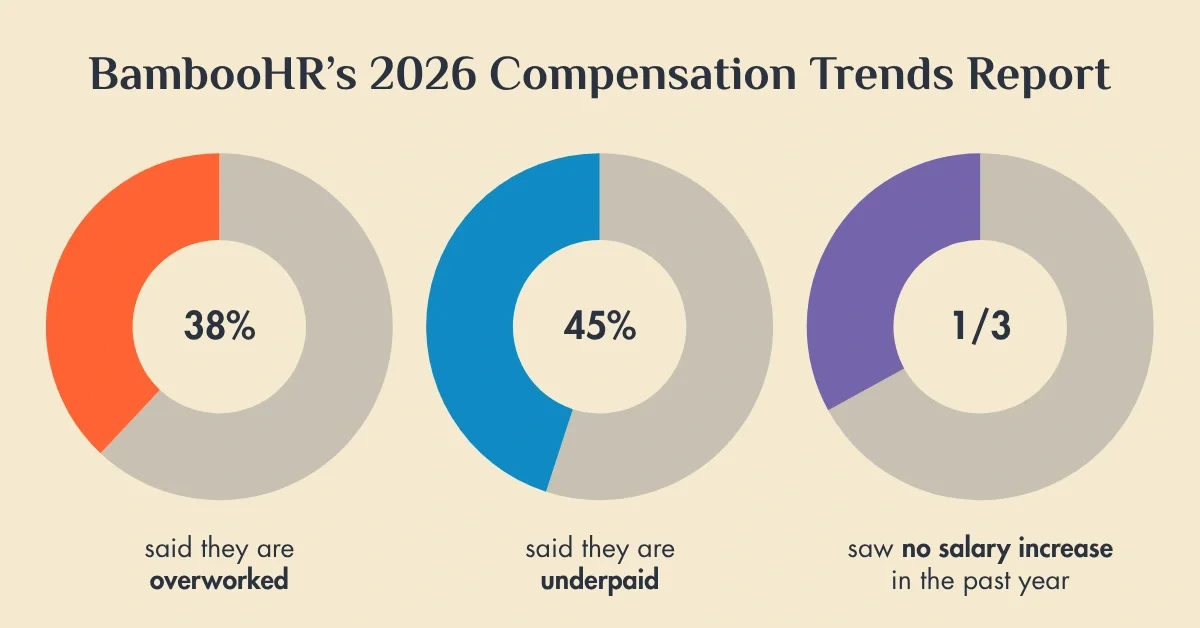
BambooHR’s 2026 compensation trends report paints the employee side of the same picture. In its survey of 1,500 full time salaried US employees 38%said they are overworked and 45% said they are underpaid. A full third saw no salary increase in the past year.
This is not an environment where every company is rushing to add three new domestic specialists to support a strained department. It is an environment where leaders are trying to protect margin, delay hiring, stretch internal capacity, and hope technology closes the gap. That hope is not a workforce strategy.
AI is not a replacement for a team.
AI is powerful. Used well, it can remove repetitive work, accelerate research, draft first versions, summarize data, improve workflows, and help people move faster. But AI does not replace accountability. It does not manage nuance. It does not own a deadline. It does not understand your client history, your internal politics, your brand standards, your operational exceptions, or the consequences of a bad handoff.
BCG’s 2026 AI at Work research found that42% of frontline employees who regularly use AI report saving eight hours per week, but most organizations still have not figured out how to convert that saved time into business value. BCG also warns that the real work is not simply buying tools, but redesigning how organizations and people function.
That is the mistake too many companies are making. They buy AI tools, cut or freeze headcount, and assume the remaining employees will magically turn software into strategy, execution, quality control, and growth.
Challenger, Gray & Christmas reported that in March 2026, AI led all cited reasons for US job cuts, accounting for 15,341 announced cuts, or 25% of total cuts that month. The same report noted that companies are shifting budgets toward AI investment at the expense of jobs, while also redefining job descriptions around what AI can do.
That is exactly where offshoring becomes a practical alternative to overload. The answer is not “replace people with AI.” The answer is “combine AI, process, and human talent in a smarter structure.”

Offshoring gives American employees leverage.
A well built offshore team does not remove the value of the US employee. It increases it. Instead of asking a US marketing director to be the strategist, analyst, content producer, designer, automation specialist, reporting coordinator, and project manager, an offshore model allows that director to lead a team. Instead of forcing an operations manager to personally handle every spreadsheet, follow up, system update, vendor task, and internal request, offshoring gives that manager execution support. Instead of making a finance leader choose between accuracy and speed, a global team can provide the extra capacity needed to do both.
This is the part critics often miss. The US employee is not always competing against the offshore employee. In the best models, the US employee is being supported by the offshore employee.
That distinction matters.
Without global support, one person is often expected to do the work of two or three. With global support, that same person can have two or three capable professionals helping them execute, organize, report, coordinate, build, and follow through. That is not job loss. That is job preservation through leverage.
Turnkey Offshoring’s own model is built around that idea. The company describes its approach as part strategy partner, part implementer, and part recruiter, helping businesses combine AI tools with experienced international team members who operate as an extension of the existing staff. Its process focuses on understanding business bottlenecks, designing practical systems, and then sourcing and integrating qualified international professionals into the organization.
That is the difference between cheap labor and real infrastructure. Cheap labor says, “Find me someone inexpensive.” Real offshoring says, “Let’s define the work, improve the process, add the right tools, recruit the right people, and build a team that makes the whole company stronger.”
The alternative is not more American hiring. The alternative is burnout.
A lot of people still talk about offshoring as if every offshore hire deletes a domestic job from the economy. But inside many companies, the real alternative is not a domestic hire. The real alternative is no hire.
Just the same American employee, the same salary band, the same packed calendar, and a longer list of responsibilities. That is why the old argument against offshoring feels increasingly detached from the modern workplace. It assumes companies are choosing between two equally likely hiring paths. They are not. Many are choosing between global capacity and internal exhaustion.
Robert Half’s December 2025 research found that 38% of employed US workers planned to look for a new job in the first half of 2026, up from 27% in July and 29% one year earlier. The top motivations were better benefits, limited advancement opportunities, more competitive pay, and burnout. WorldatWork reported the same direction of travel, noting that 38% of surveyed US workers planned to look for a new job in the first half of 2026, while employers were still being selective with hiring budgets and using hiring money strategically.
That is the warning sign. Employees are not endlessly loyal to companies that expect more output without more support. They may stay for a while. They may tolerate the stretch. They may even joke about wearing seventeen hats. But eventually, the best people start asking a dangerous question:
“Why am I doing all of this for someone else?”
AI is making independence more realistic.
There is another side effect companies should be paying attention to. As employees are asked to do more with less, AI tools are making it easier for skilled people to leave and build something on their own.
Upwork’s Future Workforce Index found that 28% of skilled knowledge workers now operate as freelancers or independent professionals, seeking more autonomy, financial control, and meaningful work. It also found that 31% of skilled freelancers identify as AI-enabled freelancers, meaning they design and market their services around a combination of human skill and AI tools.
MBO Partners’ 2025 AI report found that 74% of independent workers use generative AI in their work, up from 65% in 2024 and roughly one-third in 2023. The report also notes that independent workers are using AI across research, idea generation, writing, creative work, and other professional tasks.
That should worry companies that are trying to squeeze more output from fewer people.
Because the employee who learns to use AI to survive an unreasonable workload may eventually realize they can use the same tools to build their own client base, launch their own agency, consult independently, or join a company that gives them better support.

Offshoring is not anti-American. Bad workforce design is anti-American.
There is nothing patriotic about burning out American employees. There is nothing pro-worker about refusing to hire support, collapsing multiple jobs into one role, handing people AI tools without a real operating model, and calling the result “productivity.”
A healthier model looks different.
The US team owns strategy, relationships, leadership, judgment, client context, culture, and high-stakes decisions. Offshore professionals add capacity, specialization, follow-through, documentation, coordination, technical support, creative production, reporting, administration, and execution. AI reduces repetitive drag. Systems create clarity. Managers stop drowning in tactical work and start leading again.
That is not replacing the American worker. That is protecting the American worker from becoming the entire department. Offshoring, done correctly, allows businesses to stay competitive without forcing their best domestic employees into impossible roles. It gives companies a way to expand capacity when domestic headcount is financially unrealistic. It gives employees teammates instead of excuses. It creates breathing room, stability, and room for growth.
The uncomfortable truth is this: many companies are not going to hire enough people in the US to cover the work they expect to be done. That is the economic reality. The question is whether leaders will admit it and build smarter global teams, or pretend everything is fine while their best people quietly plan their exit.
Offshoring is not the enemy of American jobs. The real enemy is pretending one person can do the work of three forever.
Turnkey Offshoring helps companies build the smarter version: practical systems, AI-enabled workflows, and international professionals who strengthen the team you already have. Because the future of work is not about replacing people. It is about giving good people the support they need to keep winning.
Worth a Conversation?